
Strategy Without Operations Is Just a Wish
Strategy Without Operations Is Just a Wish
The gap between what your organization intends to do and what it actually delivers is an operational problem. This course is how you close it.
Welcome to Operating Essentials
Every community sport organization has goals. The goals might live in a strategic plan, in the head of the Executive Director, in a board resolution from two seasons ago, or in the collective aspiration of a coaching staff trying to build something worth building. What most organizations lack is not goals. It is the operational infrastructure to achieve them consistently; the planning, the accountability, the monitoring, the communication and the systems that turn intention into execution.
The gap between strategic intention and operational reality is where most community sport organizations lose ground. Programs are delivered inconsistently. Resources are allocated reactively. Communications go out when something happens rather than when stakeholders need them. Risks materialize that everyone knew were possible. And the same problems recur season after season, not because leaders lack commitment, but because the operational system that would prevent them has never been built. Operating Essentials is for leaders who are ready to build that system.
Who this course is for
This course is designed for Executive Directors, Technical Directors, operations managers, program coordinators and board members who are responsible for how the organization functions day to day. You do not need a background in project management or business operations. You need to lead an organization that is trying to deliver consistent, values-aligned programs to athletes and families — and you need the operational tools to do it reliably, even when resources are tight and the season is long.
The problem this course is solving
The most common operational failure in community sport is not a single catastrophic decision. It is the accumulation of small, avoidable gaps: roles that are unclear, priorities that are unspoken, resources that are allocated by whoever asks loudest, communications that go out when someone remembers, and reviews that never happen because there is always something more urgent. Over a season, these gaps compound. Over multiple seasons, they become the organization's operational culture — the way things are done rather than a temporary gap being addressed.
The organizations that deliver consistently are not the ones with the most resources. They are the ones that have built the simplest, most consistent operational practices — and actually use them. A seasonal plan reviewed monthly. A 52-week calendar. A clear PVMV filter for operational decisions. A communication rhythm that stakeholders can count on. These are not complicated. They are just consistently done.
How to use this course
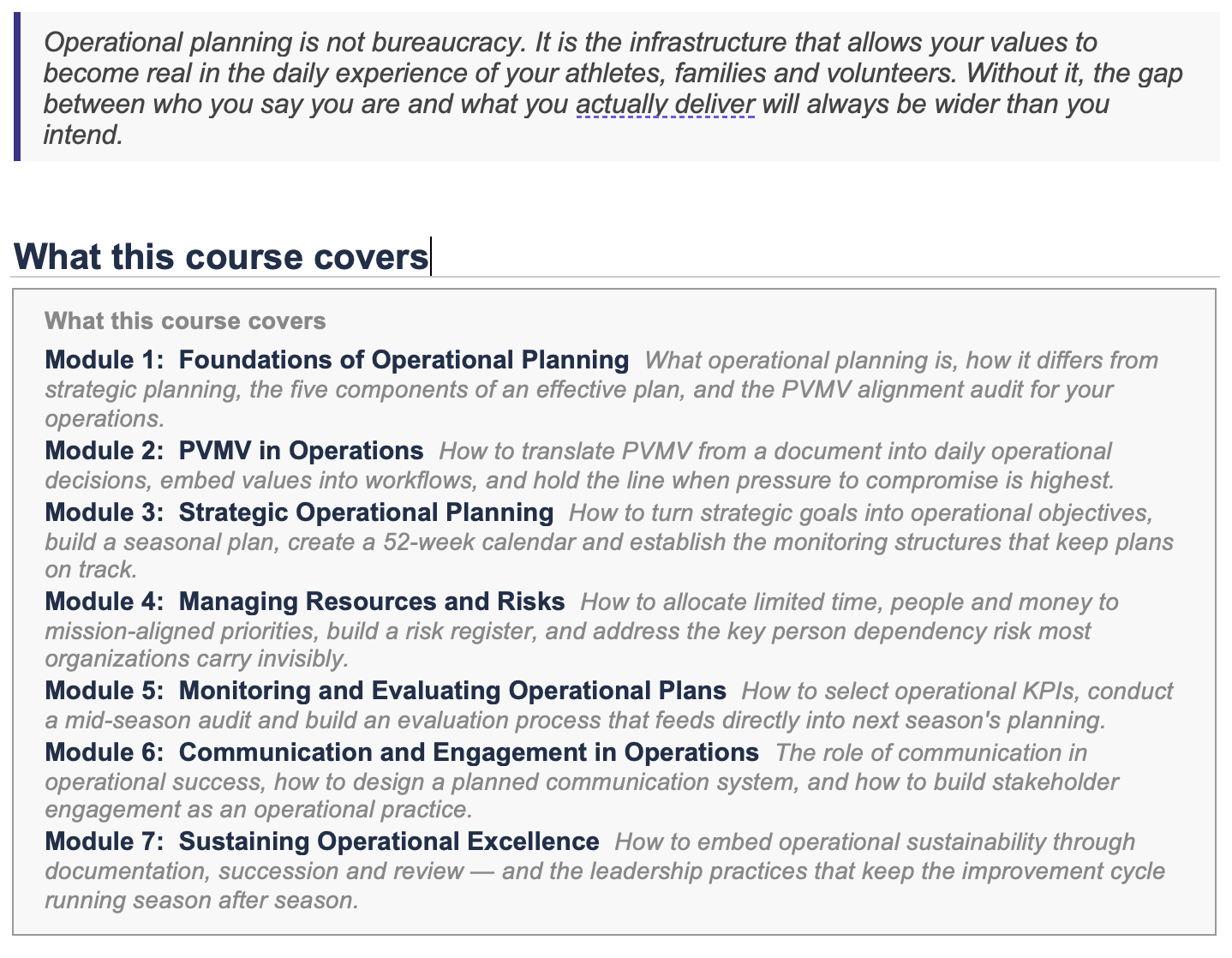
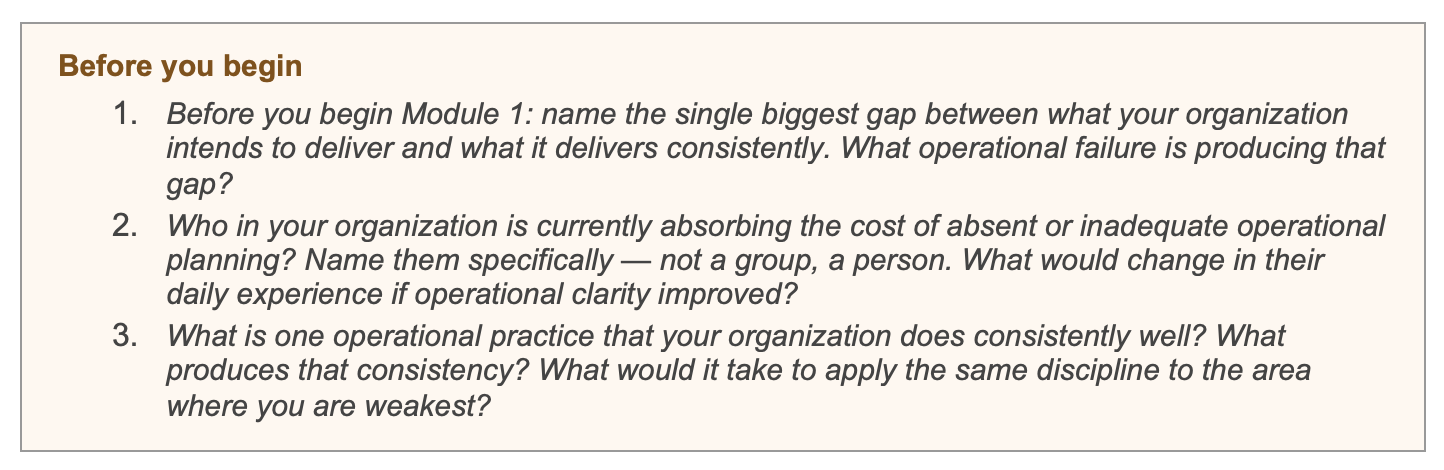
Each module builds on the previous one. Module 1 establishes the operational planning foundation. Modules 2 through 6 build the specific systems that compose a complete operational framework. Module 7 is about sustaining what you build. Work through them in sequence. The workshop activities in each module ask you to apply the concepts to your organization directly. Do not skip them. The value is entirely in the application.

0 comments