
1.2 Stakeholder Values
What your stakeholders actually value
One of the most important shifts a coach can make is moving from what they think their athletes, parents, and organisation want: to what the evidence says they actually value. These two things are often not the same.
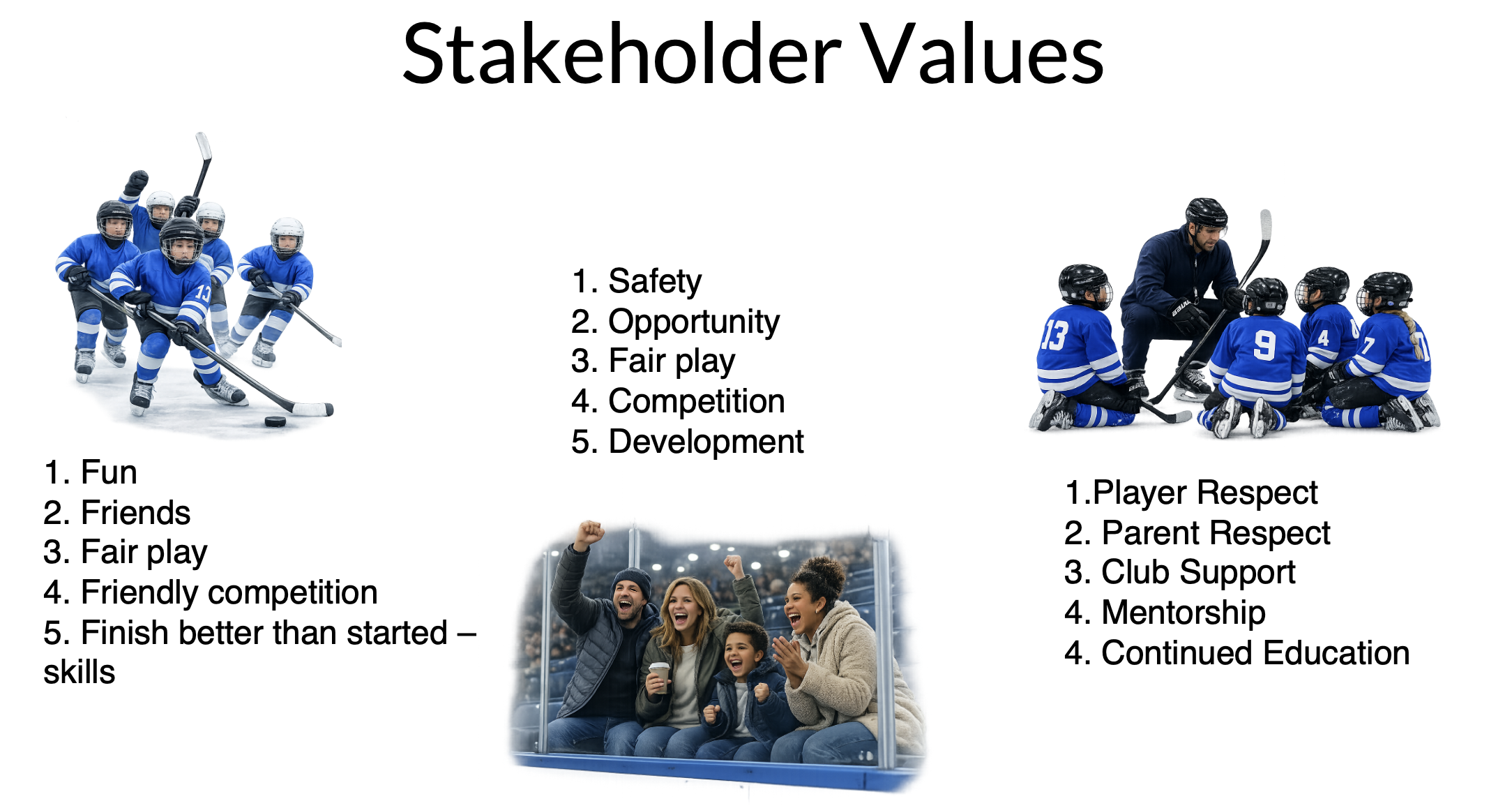
Players: the five Fs
Research consistently shows that young athletes rank these five things as their primary reasons for staying in sport:
- Fun: The single most important factor. Not winning: fun. When sport stops being enjoyable, children stop participating. Everything else on this list is a version of fun.
- Friends: Sport is where many of the most formative friendships of a young person's life are built. The social connection is not a by-product of sport for many children, it is the whole point.
- Fair play: Children have a finely tuned sense of fairness. When standards are applied inconsistently, when some players are treated differently, or when officiating is poor, children notice. It undermines trust in the environment.
- Friendly competition: Children want to be pushed, but in an environment that remains respectful and encouraging. Competitive without toxic. Challenging without crushing.
- Finish better than started: Development. Improvement. Progress. Children want to feel competent and capable. When they finish a season unable to name what they have learned or how they have grown, the experience has not delivered on its most basic promise.
Parents: what they need from the environment
- Safety: Physical and emotional safety for their child. Always. This is not aspirational, it is a baseline obligation.
- Opportunity: Every child having a genuine chance to participate, develop, and grow, regardless of current ability.
- Fair play: Standards applied equally. Good sportsmanship modelled from the top.
- Competition: A healthy competitive environment that teaches resilience, teamwork, and perseverance.
- Development: Progress that is visible, measured, and communicated. When parents can see that their child is growing not just in skill but in character, confidence, and connection they become your strongest advocates.
Coaches: what makes the role sustainable
- Player respect: Players who are engaged, responsive, and growing because of the environment the coach creates.
- Parent respect: Parents who trust the process, follow the communication protocols, and raise concerns through the appropriate channels.
- Club support: An organisation that stands behind its coaches: with tools, training, clarity of role, and recognition.
- Mentorship: Access to more experienced coaches. The best coaches are always learning from someone ahead of them.
- Continued education: The commitment to keep improving. The coach who believes they already know everything is the most dangerous coach in youth sport.
As a coach, understanding. the needs and wants of players and parents is essential to delivering on those expectations.

0 comments